
Loading...
Serving Salina, KS and surrounding areas. (785) 201-1985
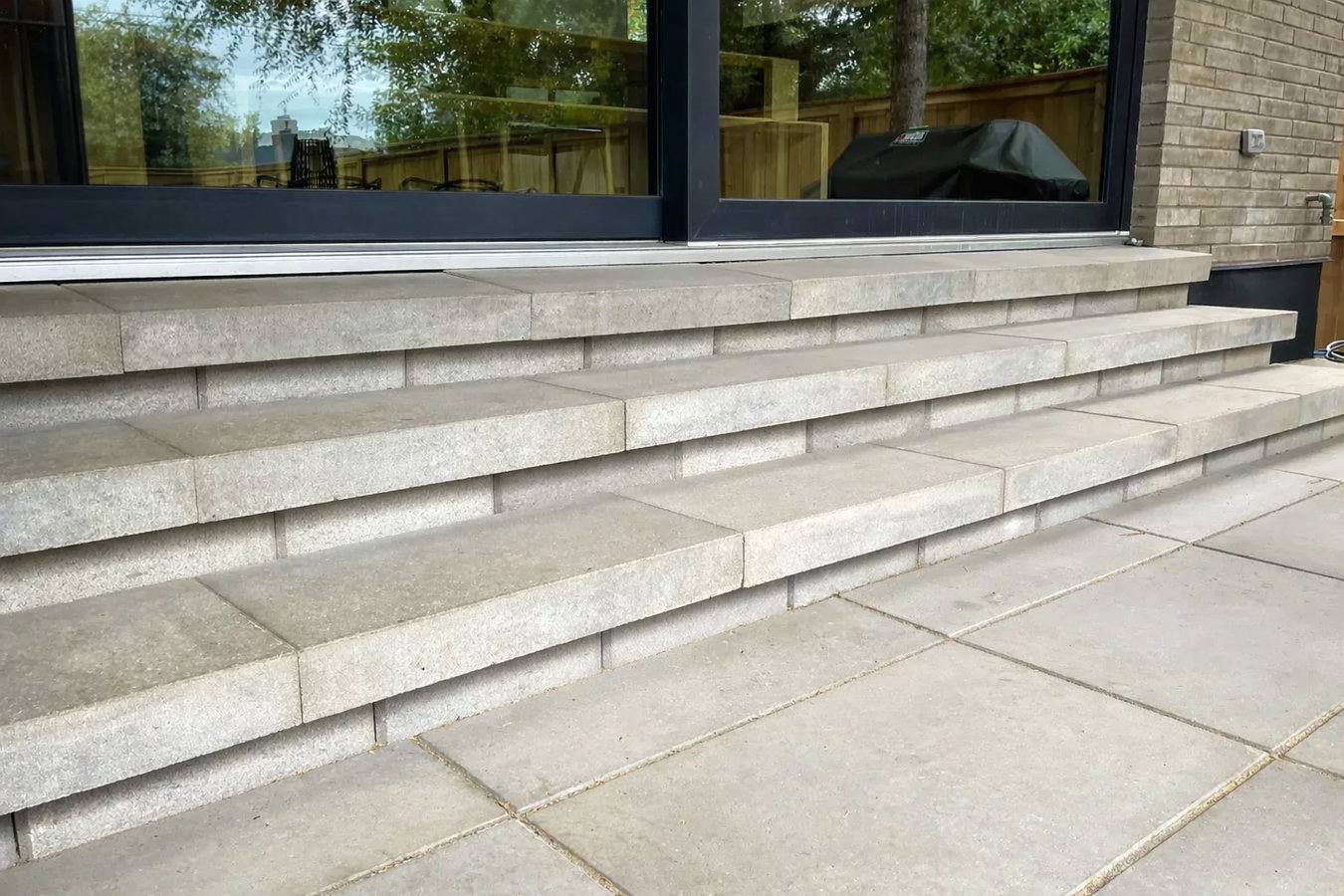
Crumbling edges, tilting steps, or a base that has completely failed? We build concrete entry steps in Salina on a properly compacted foundation, designed for clay soils and freeze-thaw winters so your front door is safe for everyone who approaches it.
Concrete steps construction in Salina, KS means demolishing old steps if needed, compacting the ground underneath, adding a gravel base layer, building wood forms, and pouring a properly mixed slab with a slip-resistant broom finish. Most residential step projects take one to two days of active work, with the concrete reaching full strength over about a week - during which the front entry is off-limits.
Most of the calls we receive about steps come from homeowners in older Salina neighborhoods - homes built in the 1950s and 1960s where original entry steps were poured directly on unprepared ground and have been shifting ever since. If your steps are crumbling at the edges or tilting away from the house, patching the surface will not solve the problem underneath. A proper replacement also addresses what connects to the steps: if you need a new walkway from the street to your door, our concrete sidewalk building service handles that work with the same base prep standards.
The base is what you never see once the job is finished, but it is what determines whether your steps stay level and intact for 40 years or start cracking again after a few winters. Skipping or shortcutting that step is the most common reason concrete steps fail early in this part of Kansas.
Cracks where one side has shifted higher than the other, or any crack wide enough to fit a finger in, signal that the base underneath has moved. In Salina, this is often caused by clay soil shifting with moisture changes. Surface patching will not fix a structural base failure - the movement will just crack whatever patch you apply.
If any step shifts when you put your weight on it, the base has failed. This is a safety issue, not just a cosmetic one - a step that moves unexpectedly is a fall risk for everyone who approaches your front door, especially in wet or icy conditions.
After several winters of freezing and thawing, concrete steps often develop flaking on the surface and crumbling at the edges - a pattern especially common on steps where ice melt products have been used for years. Once the surface starts breaking down, water gets in faster and the deterioration accelerates each winter.
If your steps are visibly sloping toward the yard rather than sitting level, or if there is a growing gap between the steps and your foundation, the soil underneath has settled. This is a common pattern on older Salina homes where original steps were poured on unprepared ground. Tilted steps also direct water toward your foundation.
We build entry steps in a range of widths, riser counts, and finishes - from a simple two-step front entry to a wider, multi-step main entrance with a landing. Every project starts the same way: we compact the soil and install a gravel base before any forms go up, because that foundation is what keeps your steps stable as the clay soil around them moves through wet and dry seasons. For homeowners whose steps connect to a concrete walkway, our concrete sidewalk building service ties both elements together on the same job.
Finish options include a standard broom texture - the most practical and slip-resistant choice for a Kansas climate - as well as colored concrete or a border detail for homeowners who want the steps to complement the exterior of their home. If your project involves a new home addition or garage and the steps are part of a larger foundation or slab project, our slab foundation building service covers the structural work those projects require.
Homeowners who want a safe, slip-resistant surface at a practical price - a textured finish that grips well when wet or icy.
Those who need a wider landing at the top of the steps, or who want rebar set during the pour for an attached handrail.
Homeowners who want steps that complement the home's exterior with a coordinated color or finished edge detail.
Those replacing crumbling or tilting original steps on older Salina homes - demo, base prep, and a fresh pour built to current standards.
Homeowners who want new steps tied into a new or existing concrete walkway for a continuous, well-drained path from the street.
A significant portion of Salina's housing stock was built between the 1940s and 1970s, and many of those homes still have their original entry steps. Steps poured during that era were often placed directly on uncompacted soil with no gravel base underneath. Over time, Saline County's clay-heavy soil swells and shrinks with moisture changes, and those steps have been tilting, cracking, and pulling away from foundations ever since. Homeowners in the older east-side neighborhoods and along the Santa Fe Avenue corridor see this pattern constantly - and it is one we deal with on concrete step projects every season. Customers near Abilene and out toward Ellsworth deal with the same clay soil conditions as Salina homeowners.
Salina winters compound the problem. Temperatures regularly swing between freezing and thawing, sometimes within the same week - and any water that has gotten into surface cracks freezes, expands, and makes those cracks wider each year. Steps on older homes that have never been replaced often show visible evidence of this: crumbling edges, flaking surfaces, and cracks running diagonally from corners. A fresh pour on a properly prepared base stops that cycle. Sealing the finished steps protects against future water penetration, which is the most practical thing a homeowner can do to extend their life once they are in place.
We respond within 1 business day. Tell us how many steps you need, the approximate width, and whether old steps need to come out. We schedule a quick on-site visit to measure and assess before giving you a written quote covering every line item.
We handle the City of Salina permit application - you do not need to manage that process. Once the permit is approved, we confirm your start date. Permitted work means a city inspector signs off before the job is closed out.
If old steps are coming out, that happens first - it's loud and generates debris the crew hauls away. Then we compact the ground and add a gravel base. This prep work determines whether your new steps last 10 years or 40. We build the wood forms in the shape of your steps before the pour.
We pour and finish the concrete with a broom texture for grip, then keep the area off-limits while it cures - usually several days before normal foot traffic. We return to strip the forms and walk through the finished steps with you before closing the job.
We come to your property, assess the existing conditions, and give you a written quote covering every cost - before anyone picks up a shovel.
(785) 201-1985Much of Saline County sits on expansive clay that swells in wet springs and shrinks in dry summers. That movement tilts and cracks steps poured on unprepared ground. We compact the soil and add a gravel base on every project - not as an optional upgrade, but as the standard practice that makes the rest of the work hold up.
We pull every permit the City of Salina requires before work begins. In Salina's older neighborhoods, unpermitted improvements are common and can complicate home sales years later. Your new steps will be documented, inspected, and on record - so there is nothing to explain when a buyer's inspector shows up.
Salina's winters swing between freezing and thawing repeatedly, which is the main driver of step deterioration in this climate. We specify concrete mixes rated for freeze-thaw conditions and schedule pours for appropriate temperatures - following Portland Cement Association guidelines for residential exterior work in cold climates.
A large share of Salina's housing stock dates from the 1940s through the 1970s, and original entry steps on those homes are frequently at or past the end of their useful life. We work in these neighborhoods regularly, understand what the soil and foundation conditions look like, and know what a proper replacement requires from the ground up.
The result of all four points is the same: entry steps that stay level, resist cracking through Salina winters, and give every person who approaches your front door a safe, stable surface to stand on - for decades, not a few seasons.
If your steps connect to a home addition or new construction, a properly engineered slab foundation is where that work starts.
Learn MoreConnect new steps to a properly graded concrete walkway that channels foot traffic and water away from your foundation.
Learn MoreSpring and fall booking slots fill fast - call or reach out now to lock in your project before the best weather window closes.